

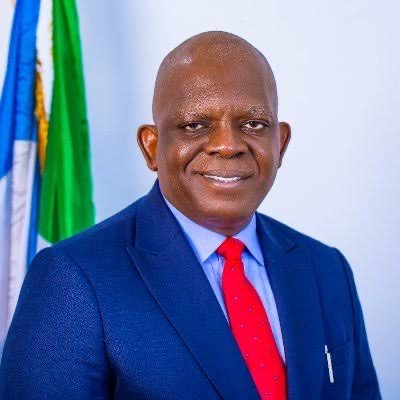
The Executive Secretary and CEO of the Nigerian Shippers’ Council (NSC), Barr. Akutah Pius Ukeyima, has defended the Council’s recent tariff adjustments and the delayed rollout of the International Cargo Tracking Note (ICTN), stating that every decision is driven by law, due process, and broad stakeholder engagement.
Speaking in an extensive interview, Akutah said tariff regulation is a core statutory duty under Sections 5 and 6 of the Port Economic Regulations 2025.
He explained that after more than two and a half years without review, service providers had pressed for increases of 150% to 300% due to rising operational costs.
The Council instead approved a structured adjustment framework of about 35%, applied as a flexible band of 10% to 20% depending on operational realities, to prevent economic shock.
“Tariff adjustment cannot be treated as a profit-driven exercise,” Akutah noted. “With over 80% of Nigeria’s trade dependent on maritime transport, any hike has immediate ripple effects.”
On industry tensions, he clarified that disputes were isolated, largely involving Mediterranean Shipping Company (MSC), while other lines concluded engagements without incident.
He stressed that the Council’s role is to maintain equilibrium, not favour one side. “Regulatory capture undermines transparency. Our job is to protect both shippers and service providers,” he said.
Addressing the ICTN delay, Akutah attributed it to legal disputes and historical inconsistencies. The Council is working with the Ministry of Justice to resolve outstanding litigation before full rollout.
He reaffirmed that ICTN remains critical for cargo security, tracking efficiency, and revenue protection, but must be implemented on solid legal ground to avoid setbacks.
Akutah emphasized that the NSC will continue to prioritize sectoral stability, investment sustainability, and national trade interests through lawful, consultative action.
