

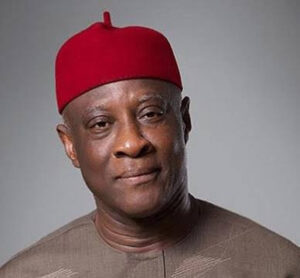
Former Minister of Interior and maritime veteran, Emmanuel Iheanacho, has declared that the media is central to sustainable growth in Nigeria’s maritime sector, cautioning that while responsible journalism can drive reforms and attract investment, inaccurate reporting will derail progress and destroy investor confidence.
Iheanacho delivered the warning through Dr. Emeka Akabogwu (SAN) at a reception hosted by the Maritime Reporters Association of Nigeria (MARAN) in Lagos to honour its past presidents.
Drawing on nearly five decades of experience in private enterprise and public service, Iheanacho outlined four critical roles the media plays in maritime development: agenda-setting, accountability, public education, and stakeholder mobilisation.
“The media has a unique power to shape national priorities by consistently spotlighting challenges like port congestion, high transaction costs, infrastructure gaps, and policy inconsistencies,” he said.
“Many genuine industry problems never enter policy consciousness until the media shines a sustained light on them”.
He praised maritime journalists for their watchdog role in exposing inefficiencies and corruption but warned against reports based on incomplete facts or weak technical grasp.
“A misleading report may damage confidence, unsettle investors, and distort policy debates. Accountability journalism must be rigorous, fair, and evidence-based,” Iheanacho stressed.
The former minister also called for better public education on maritime issues, noting that the sector remains poorly understood despite its impact on trade, pricing, and jobs.
He urged data-driven reporting, simpler policy explanations, and more coverage of inland waterways and coastal economies.
“Nigeria cannot build a strong blue economy with a poorly informed public,” he said.
On stakeholder mobilisation, Iheanacho said the media bridges government, regulators, and private operators, but must go beyond event reporting to track commitments and ensure promises deliver measurable outcomes.
Speaking directly to MARAN, he described maritime journalism as a “strategic national assignment” and charged practitioners to deepen technical knowledge and guard credibility.
“Your words can attract confidence or discourage it. Your analysis can clarify choices or deepen confusion.”
MARAN’s pioneer president, Alban Opara, recalled the association’s 1988 founding during severe port congestion under the Structural Adjustment Programme.
He noted that early reporters worked without accreditation but used investigative journalism to expose artificial congestion and costly demurrage, helping shape the National Shipping Policy and Cabotage regime.
Former Customs Comptroller Usman Bello Kankara, represented at the event, traced his ties to MARAN back to 1989 and credited the association’s coverage with boosting professionalism at the Nigeria Customs Service.
The Abuja MoU, represented by Engr. Richard Owolabi, hailed MARAN as a vital partner for safe, sustainable shipping in West and Central Africa.
MARAN Caretaker Committee Chairman, Tunde Ayodele, said the reception was a historic move to reconnect with the association’s roots and honour founding leaders.
He paid tribute to deceased members and cited past presidents like Alban Opara, Elder Asu Beks, Sesan Onileimo, Elder Pius Mordi, and Dr. Bolaji Akinola as examples of enduring leadership.
“When my team assumed office, one key priority was to reconnect with our roots by honouring these great men,” Ayodele said. “Their wisdom remains essential to MARAN’s future.”
