

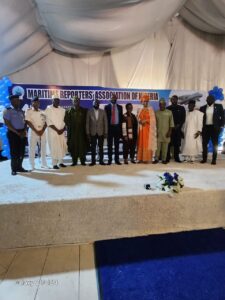
 LAGOS, SEPT 10, 2026 — Nigeria’s ports are getting facelifts, but stakeholders say that alone won’t cut it.
At the 2026 Annual Maritime Lecture organized by the Maritime Reporters Association of Nigeria, MARAN, the focus shifted from how much government is spending on ports to what Nigerians are actually getting for it: faster cargo delivery, lower costs, and more exports.
Special Adviser to President Bola Tinubu on Policy Coordination and Head of the Central Delivery Coordination Unit, Hadiza Bala Usman, led the charge.
She said port modernisation must be judged by 6 real-world results: better infrastructure and operating models, modern equipment, digitalisation, institutional reform, skilled manpower, and commercial reforms around tariffs, concessions and service delivery.
“Nigeria’s seaports handle more than 80% of the country’s physical imports and exports,” Usman noted. “So when port costs are high, it shows up everywhere — in the price of rice at the market, in a manufacturer’s raw materials, and in exchange-rate pressure from dollar-denominated charges.”
Some Progress, But Work Remains
Usman commended recent gains. Citing the World Bank and S&P Global Market Intelligence’s Container Port Performance Index, she said Tin Can Island Port ranked 10th globally, while Lagos Port Complex, Apapa ranked 12th among the world’s most improved container ports between 2020 and 2025.
She also pointed to rising cargo throughput, digitalisation drives, and ongoing rehabilitation of major ports as signs that reforms are working. But she warned that progress must be sustained.
The reconstruction of Apapa and Tin Can Island ports, rehabilitation of eastern ports, expansion of Lekki Deep Sea Port and other projects, she said, will only pay off if backed by efficient roads, rail, barges, and dry-port links.
“A port cannot be globally competitive if its hinterland is not competitive,” she said.
The N15m Container Problem
The former NPA Managing Director called for a total review of Nigeria’s port tariff structure. She said the conversation should move from individual charges to the total cost of moving one container from ship to warehouse.
Reports that clearing a standard 20ft container in Apapa now costs between N14 million and N15 million should worry policymakers, she added.
That total includes statutory tariffs, terminal handling, shipping line charges, detention, demurrage, haulage, documentation and clearing fees — often far higher than in competing West African ports.
“Charges cannot remain frozen while infrastructure deteriorates, but neither can users be required to pay any amount demanded,” Usman said. “Tariffs must be linked to value and performance.”
She urged government to scrap duplicated and obsolete charges and to adopt a predictable, transparent, performance-based tariff regime backed by published benchmarks.
She also proposed an annual _Port Economic Performance Report_ to track vessel and truck turnaround times, cargo-handling productivity, equipment availability, customs clearance, total logistics costs, digital transactions, export connectivity, customer satisfaction, and dispute-resolution timelines.
FG Promises Structural Renewal
Representing the Minister of Marine and Blue Economy, Adegboyega Oyetola, the NPA’s General Manager, Corporate and Strategic Communications, Mr. Seyi Iyawe, said the Federal Government has approved a comprehensive modernisation of Apapa, Tin Can Island and other ports.
“This is structural renewal, not cosmetic rehabilitation,” Iyawe said. The plan includes rebuilding key infrastructure, deeper channels for bigger vessels, replacement of obsolete equipment, and a full overhaul of port operations.
“Our objective is to create ports that can move cargo faster, accommodate larger vessels, reduce turnaround time and lower the cost per unit of cargo handled,” he stated.
He added that expanding deep-sea port capacity is critical to decentralize cargo, ease pressure on Lagos ports, and open new corridors for investment, jobs and industry.
The message from MARAN 2026 was clear: pour concrete if you must, but Nigerians will only feel port modernisation when cargo moves faster and costs less.
