

 Abuja, Nigeria | August 2026
Relief has come to Nigeria’s shipping industry as the United States Coast Guard, USCG, has lifted the 12-year Condition of Entry, CoE, imposed on vessels arriving in the United States after calling at Nigerian ports.
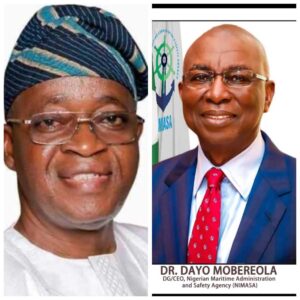
The landmark decision, announced by the Minister of Marine and Blue Economy, Adegboyega Oyetola, ends more than a decade of enhanced security requirements for vessels trading between Nigeria and the U.S.
*End of 12 Years of Enhanced Scrutiny*
The CoE came into effect on June 25, 2014. It required vessels destined for the U.S. that had called at designated Nigerian ports within their previous five port calls to undergo additional security measures and inspections before entering U.S. waters.
Oyetola described the removal as “a strong affirmation of the progress Nigeria has made in strengthening maritime security and implementing the International Ship and Port Facility Security, ISPS, Code across our ports and facilities.”
*Four Assessments Paved the Way*
According to the Minister, the lifting followed four comprehensive USCG assessments conducted over the past two years:
– March 11–13, 2024
– April 15–19, 2024
– March 15–21, 2025
– April 13–17, 2026
The assessments covered Nigeria’s national maritime security framework and port facilities, and demonstrated significant improvement in ISPS Code implementation.
Oyetola credited the breakthrough to sustained efforts by the Federal Ministry of Marine and Blue Economy, through the Nigerian Maritime Administration and Safety Agency, NIMASA, in collaboration with port operators, terminal operators, shipping companies and other stakeholders.
He commended NIMASA Director-General, Dr. Dayo Mobereola, and his team for driving compliance with international maritime safety and security standards.
“We are committed to sustaining this momentum and ensuring that Nigeria remains a safe, secure and competitive destination for international shipping,” the Minister.
For more than a decade, the CoE translated into additional inspections, documentation, security procedures and potential delays, raising operational costs and affecting vessel turnaround time.
With the restriction lifted, vessels calling at Nigerian ports before sailing to the U.S. will no longer face those extra USCG requirements. The development is expected to:
Improve vessel turnaround and schedule reliability;
*Reduce costs for shipping companies*
*Make Nigerian ports more attractive to international shipping lines*
*Boost trade flows and investment*
For Nigerian ports competing with regional rivals, the decision is a major reputational and operational gain.
*A New Benchmark to Sustain*
The lifting also carries symbolic value. For 12 years, the restriction highlighted deficiencies in Nigeria’s maritime security. Its removal now provides evidence of measurable progress.
Oyetola, however, cautioned that the achievement must be sustained through rigorous ISPS enforcement, stronger port facility security and continued regulatory oversight to prevent a relapse.
“If sustained, this breakthrough will help Nigeria attract more shipping activity, reduce avoidable costs, improve port efficiency and strengthen our position in the global maritime economy,” he said.
After 12 years under heightened scrutiny, Nigeria’s maritime sector now has a fresh opportunity to convert improved security credentials into greater port competitiveness, increased trade and stronger participation in international shipping.
Want me to also do a 90-word breaking news version with headline *”US Lifts 12-Year Shipping Sanction on Nigeria”* for front page?
