

High charges, decaying infrastructure, and manual operations are choking Nigerian ports — and may drive cargo to neighbouring countries.
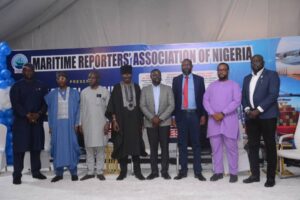
That was the verdict of maritime stakeholders at the 4th MARAN Maritime Annual Lecture, MAMAL 2026, held at the Nigerian Air Force Events Centre, Kofo Abayomi Street, Victoria Island, Lagos.
The lecture, organised by the Maritime Reporters’ Association of Nigeria, MARAN, was themed *“Nigerian Ports Modernisation, Charges and the Competitiveness Question.”*
Moderating the panel, Mr. Emmanuel Maigunwa said competitiveness is not just about cheaper imports, but about making Nigeria the preferred transit hub for West Africa.
“When ports are efficient and competitively priced, citizens pay less, and Nigeria can attract transit cargoes from neighbours,” he said.
“Too Many Charges”
Representing NACCIMA, Mr. Willem Inya said the multiplicity of charges remains private sector’s biggest pain.
“Importers face several charges to clear one container. Delays then attract demurrage, pushing cost even higher,” he said, calling for harmonisation and rationalisation of all port charges to keep Nigerian businesses competitive.
Captain Ladi Olubowale of the African Ship Owners Association warned that expensive ports fuel smuggling and inflation. Cargo diverted to Benin or Togo still finds its way into Nigeria by road — at extra cost to consumers.
He said Nigeria’s $1 trillion economy target by 2030 will be impossible without efficient, competitively-priced ports.
“Most Ports Are Over 50 Years Old”
Joseph Adegbite, Assistant General Manager, Corporate and Strategic Planning, Nigerian Ports Authority, NPA, blamed ageing infrastructure.
Apart from Lekki Deep Sea Port, most Nigerian ports are over 50 years old. That limits the equipment that can be deployed and slows down vessel and cargo turnaround, he said.
“Every inefficiency translates into additional cost for port users,” Adegbite stressed.
He said the Federal Government’s modernisation programme is starting with Lagos ports due to volume, but will extend to Eastern ports — Rivers, Warri, and Onne, which all need major upgrades.
But modernisation must go beyond concrete, he argued. “Port operation is a communal system. It is a community.”
Nigeria needs full digital integration — Port Community System, Maritime Single Window, renewable energy, and eliminating operational silos among agencies.
“Attitude Problem”
From the floor, Managing Director of Le Look Bags, Mrs. Chinwe Ezenwa, said infrastructure alone won’t fix the ports if users keep vandalising them.
She said she has witnessed government facilities being destroyed and called for sensitisation and reorientation of port users.
“We can invest billions in infrastructure, but if Nigerians don’t protect public assets, it’s wasted,” Ezenwa said.
The Consensus
Stakeholders agreed Nigeria needs a coordinated reset: renew infrastructure, integrate digitally, publish transparent and harmonised charges, reorient stakeholders, and improve efficiency.
They noted that Nigeria’s strategic location can only translate to economic growth if its ports are efficient, competitive and attractive to cargo owners across the region.
MAMAL 2026 brought together policymakers, regulators, operators, academics and journalists to dissect how to make Nigerian ports cheaper, faster and regionally dominant.
